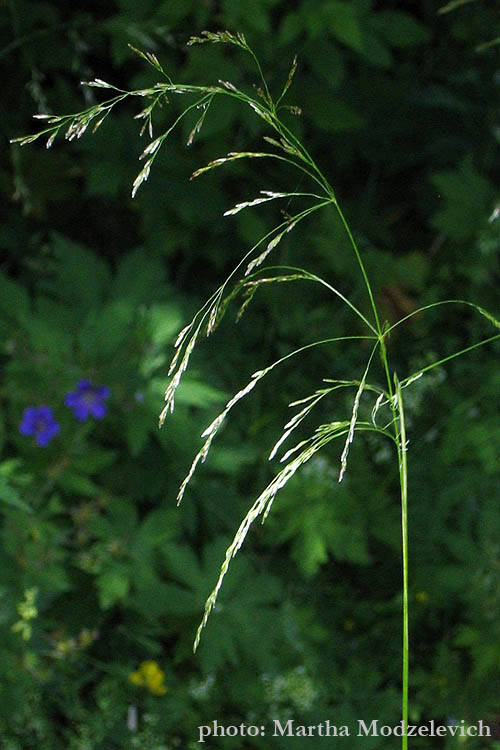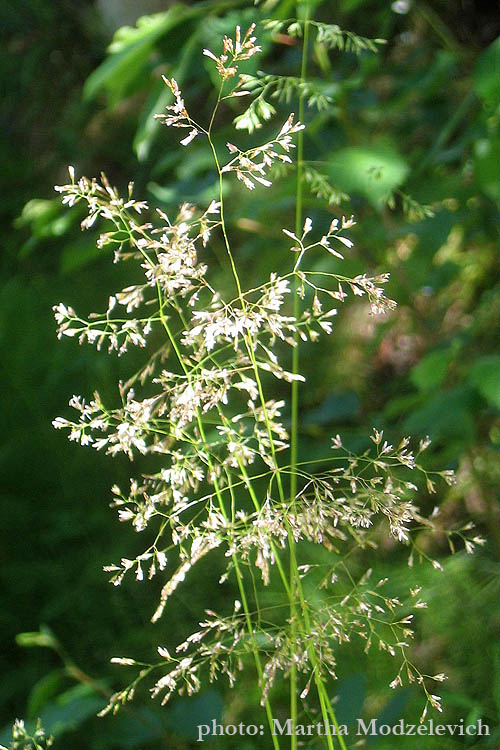
Derivation of the botanical name:
Festuca, a "rod", literally "straw," which can be a twig or small stick. Latin name on grass straw by Marcus Terentius Varro (116 BCE – 27 BCE).
Altissima, Altus, "high" and means "the highest".
- The standard author abbreviation All. is used to indicate Carlo Allioni (1728 – 1804), an Italian physician and professor of botany at the University of Turin.
- The standard author abbreviation Pollich is used to indicate Johan Adam Pollich (1740 – 1780), a German doctor, botanist and entomologist.
- The standard author abbreviation Vill. is used to indicate Dominique Villars (1745 – 1814), a French botanist.
|